Portrait of Byeongjun Park

Byeongjun Park

AI Research Scientist @ EverEx

I am an AI Research Scientist at EverEx. Previously, I received my B.S. and Ph.D. degrees in Electrical Engineering from KAIST, where I was advised by Prof. Changick Kim. My Ph.D. thesis, “Scalable Generative Modeling for Visual Content Creation,” explores inference-time scaling methods and scalable training strategies for diffusion transformers. My current research centers on video, 3D, and 4D generation, and lately on world (action) models in particular.

Research Interests

Video Generation & Understanding

Developing controllable video diffusion and its few-step distillation, as well as a scalable inference for VideoLLMs and a benchmark for reasoning across multi-view 4D scenes.

See all 5 papers

3D/4D Generation

Creating high-quality 3D/4D objects and scenes with generative models (GAN, diffusion, rectified flow) and lifting them into point cloud, mesh, NeRF, and 3DGS representations.

See all 5 papers

Diffusion Model Architecture

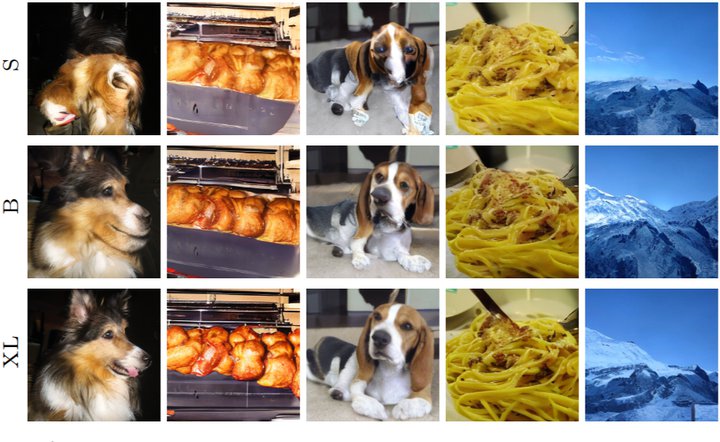
Reimagining diffusion training as multi-task learning over denoising tasks at different noise levels, and synergizing the training of these tasks with Mixture-of-Experts frameworks.

See all 3 papers

News

Publications

* equal contribution

FlashRender: Few-Step Generative Rendering via Camera-Controlled Video MeanFlow

Byeongjun Park, Byung-Hoon Kim, Hyungjin Chung

Preprint 2026Video Generation & Understanding

We present FlashRender, a few-step generative rendering framework that retakes a source video along a target camera trajectory in seconds. We identify sampling-step-dependent camera control as a prominent manifestation of discretization error in existing multi-step generative rendering models and show that resolving this inconsistency substantially lowers denoising trajectory curvature, facilitating subsequent step distillation. To this end, we introduce Representation Transformation and Alignment (RETA), which aligns hidden source-video representations with target-video features from a frozen visual geometry model. This directly encodes the geometric transformation within the source-video stream, enabling sampling-step-consistent camera control. We then fine-tune the model with the MeanFlow objective on the lower-curvature denoising trajectory induced by RETA, allowing the model to more effectively address discretization error. Finally, we apply on-policy flow map distillation to correct self-rollout errors under fixed few-step sampling. Extensive experiments show that RETA, MeanFlow, and on-policy flow map distillation play complementary roles in few-step generative rendering. Together, they enable our approach to match multi-step baselines in video quality and geometric consistency at 25x lower sampling cost while achieving superior camera controllability, even under out-of-distribution target camera trajectories.
MVVBench: Benchmarking 4D Reasoning in Vision-Language Models

Hyungjin Chung*, Byeongjun Park*, Joonseok Lee, Hojun Kim, Jaeho Choi, Byung-Hoon Kim

NeurIPS 2026 E&D TrackVideo Generation & Understanding

MVVBench: Benchmarking 4D Reasoning in Vision-Language Models

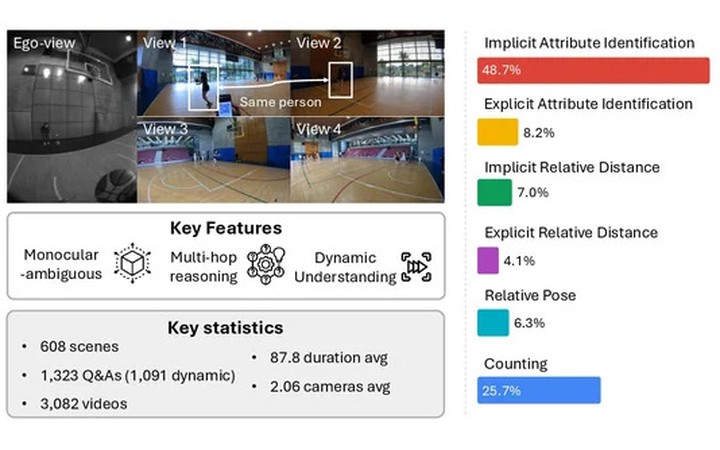
Multi-view video understanding requires integrating spatial and temporal evidence across multiple, often non-overlapping camera streams: tracking entities as they transition between viewpoints, aligning events across time, and reasoning about latent 4D continuity rather than any single visible frame. We introduce MVVBench, a benchmark for multi-view video reasoning built from real world multi camera datasets. Questions are curated to be monocular-ambiguous along both the view and the temporal axis: each question is unanswerable from any single view in the designated input set, and the majority are further unanswerable from any single moment. Each question becomes uniquely solvable only by jointly reasoning across views and across time. MVVBench spans diverse dynamic scenes and probes six capabilities: implicit/explicit attribute identification, implicit/explicit relative distance, relative camera pose, and compositional counting, with human-authored QA and rigorous verification. Beyond benchmarking, we provide an extensive analysis of when and why current vision language models succeed or fail, characterizing errors due to temporal mis-localization, cross-view identity breaks, and brittle multi-hop reasoning. We then study inference-time elicitation strategies that unlock latent multi-view competence—task-specific chain-of-thought scaffolds and structured cross-view evidence aggregation—yielding substantial gains without retraining. Finally, we present preliminary evidence that reinforcement learning with verifiable rewards can elicit some latent multi-view competence in the base model, pointing to training-time approaches as a promising direction for future work. Together, MVVBench offers a rigorous evaluation of 4D multi-view reasoning and a foundation for future progress toward reliable embodied perception.

Generating Human Motion Videos using a Cascaded Text-to-Video Framework

Hyelin Nam, Hyojun Go, Byeongjun Park, Byung-Hoon Kim, Hyungjin Chung

BMVC 2026Video Generation & Understanding

Human video generation is becoming an increasingly important task with broad applications in graphics, entertainment, and embodied AI. Despite the rapid progress of video diffusion models (VDMs), their use for general-purpose human video generation remains underexplored, with most works constrained to image-to-video setups or narrow domains like dance videos. In this work, we propose CAMEO, a cascaded framework for general human motion video generation. It seamlessly bridges Text-to-Motion (T2M) models and conditional VDMs, mitigating suboptimal factors that may arise in this process across both training and inference through carefully designed components. Specifically, we analyze and prepare both textual prompts and visual conditions to effectively train the VDM, ensuring robust alignment between motion descriptions, conditioning signals, and the generated videos. Furthermore, we introduce a camera-aware conditioning module that connects the two stages, automatically selecting viewpoints aligned with the input text to enhance coherence and reduce manual intervention. We demonstrate the effectiveness of our approach on both the MovieGen benchmark and a newly introduced benchmark tailored to the T2M-VDM combination, while highlighting its versatility across diverse use cases.

ReDirector: Creating Any-Length Video Retakes with Rotary Camera Encoding

Byeongjun Park, Byung-Hoon Kim, Hyungjin Chung, Jong Chul Ye

CVPR 2026Video Generation & Understanding

We present ReDirector, a novel camera-controlled video retake generation method for dynamically captured variable-length videos. In particular, we rectify a common misuse of RoPE in previous works by aligning the spatiotemporal positions of the input video and the target retake. Moreover, we introduce Rotary Camera Encoding (RoCE), a camera-conditioned RoPE phase shift that captures and integrates multi-view relationships within and across the input and target videos. By integrating camera conditions into RoPE, our method generalizes to out-of-distribution camera trajectories and video lengths, yielding improved dynamic object localization and static background preservation. Extensive experiments further demonstrate significant improvements in camera controllability, geometric consistency, and video quality across various trajectories and lengths.

Video Parallel Scaling: Aggregating Diverse Frame Subsets for VideoLLMs

Hyungjin Chung, Hyelin Nam, Jiyeon Kim, Hyojun Go, Byeongjun Park, Seongsu Ha, Byung-Hoon Kim

CVPR 2026 FindingsVideo Generation & Understanding

Video Parallel Scaling: Aggregating Diverse Frame Subsets for VideoLLMs

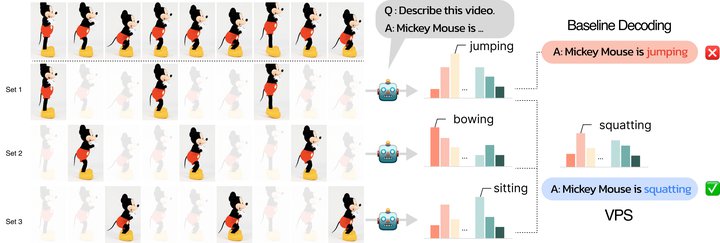
Video Large Language Models (VideoLLMs) face a critical bottleneck: increasing the number of input frames to capture fine-grained temporal detail leads to prohibitive computational costs and performance degradation from long context lengths. We introduce Video Parallel Scaling (VPS), an inference-time method that expands a model's perceptual bandwidth without increasing its context window. VPS operates by running multiple parallel inference streams, each processing a unique, disjoint subset of the video's frames. By aggregating the output probabilities from these complementary streams, VPS integrates a richer set of visual information than is possible with a single pass. We theoretically show that this approach effectively contracts the Chinchilla scaling law by leveraging uncorrelated visual evidence, thereby improving performance without additional training. Extensive experiments across various model architectures and scales (2B-32B) on benchmarks such as Video-MME and EventHallusion demonstrate that VPS consistently and significantly improves performance. It scales more favorably than other parallel alternatives (e.g. Self-consistency) and is complementary to other decoding strategies, offering a memory-efficient and robust framework for enhancing the temporal reasoning capabilities of VideoLLMs.

VideoRFSplat: Direct Scene-Level Text-to-3D Gaussian Splatting Generation with Flexible Pose and Multi-View Joint Modeling

Hyojun Go*, Byeongjun Park*, Hyelin Nam, Byung-Hoon Kim, Hyungjin Chung, Changick Kim

ICCV 20253D/4D Generation

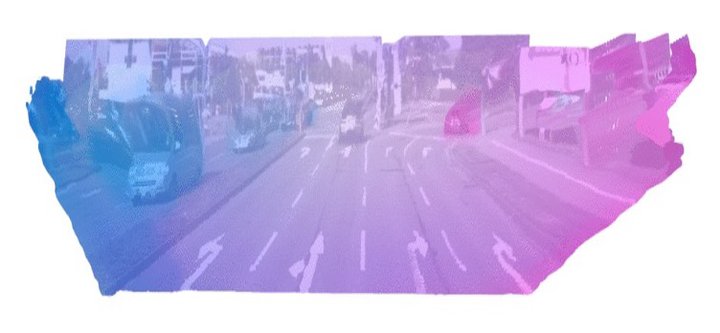
We propose VideoRFSplat, a direct text-to-3D model leveraging a video generation model to generate realistic 3D Gaussian Splatting (3DGS) for unbounded real-world scenes. To generate diverse camera poses and unbounded spatial extent of real-world scenes, while ensuring generalization to arbitrary text prompts, previous methods fine-tune 2D generative models to jointly model camera poses and multi-view images. However, these methods suffer from instability when extending 2D generative models to joint modeling due to the modality gap, which necessitates additional models to stabilize training and inference. In this work, we propose an architecture and a sampling strategy to jointly model multi-view images and camera poses when fine-tuning a video generation model. Our core idea is a dual-stream architecture that attaches a dedicated pose generation model alongside a pre-trained video generation model via communication blocks, generating multi-view images and camera poses through separate streams. This design reduces interference between the pose and image modalities. Additionally, we propose an asynchronous sampling strategy that denoises camera poses faster than multi-view images, allowing rapidly denoised poses to condition multi-view generation, reducing mutual ambiguity and enhancing cross-modal consistency. Trained on multiple large-scale real-world datasets (RealEstate10K, MVImgNet, DL3DV-10K, ACID), VideoRFSplat outperforms existing text-to-3D direct generation methods that heavily depend on post-hoc refinement via score distillation sampling, achieving superior results without such refinement.

SteerX: Creating Any Camera-Free 3D and 4D Scenes with Geometric Steering

Byeongjun Park*, Hyojun Go*, Hyelin Nam, Byung-Hoon Kim, Hyungjin Chung, Changick Kim

ICCV 20253D/4D Generation

CVPR 2025 Workshop on WorldModelBench

SteerX: Creating Any Camera-Free 3D and 4D Scenes with Geometric Steering

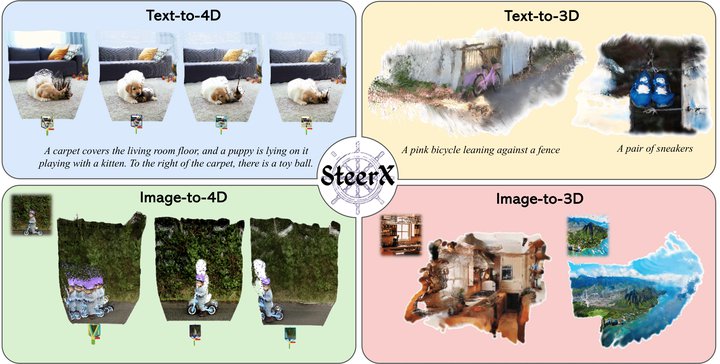
Recent progress in 3D/4D scene generation emphasizes the importance of physical alignment throughout video generation and scene reconstruction. However, existing methods improve the alignment separately at each stage, making it difficult to manage subtle misalignments arising from another stage. Here, we present SteerX, a zero-shot inference-time steering method that unifies scene reconstruction into the generation process, tilting data distributions toward better geometric alignment. To this end, we introduce two geometric reward functions for 3D/4D scene generation by using pose-free feed-forward scene reconstruction models. Through extensive experiments, we demonstrate the effectiveness of SteerX in improving 3D/4D scene generation.

SplatFlow: Multi-View Rectified Flow Model for 3D Gaussian Splatting Synthesis

Hyojun Go*, Byeongjun Park*, Jiho Jang, Jin-Young Kim, Soonwoo Kwon, Changick Kim

CVPR 20253D/4D Generation

Text-based generation and editing of 3D scenes hold significant potential for streamlining content creation through intuitive user interactions. While recent advances leverage 3D Gaussian Splatting (3DGS) for high-fidelity and real-time rendering, existing methods are often specialized and task-focused, lacking a unified framework for both generation and editing. In this paper, we introduce SplatFlow, a comprehensive framework that addresses this gap by enabling direct 3DGS generation and editing. SplatFlow comprises two main components: a multi-view rectified flow (RF) model and a Gaussian Splatting Decoder (GSDecoder). The multi-view RF model operates in latent space, generating multi-view images, depths, and camera poses simultaneously, conditioned on text prompts, thus addressing challenges like diverse scene scales and complex camera trajectories in real-world settings. Then, the GSDecoder efficiently translates these latent outputs into 3DGS representations through a feed-forward 3DGS method. Leveraging training-free inversion and inpainting techniques, SplatFlow enables seamless 3DGS editing and supports a broad range of 3D tasks-including object editing, novel view synthesis, and camera pose estimation-within a unified framework without requiring additional complex pipelines. We validate SplatFlow's capabilities on the MVImgNet and DL3DV-7K datasets, demonstrating its versatility and effectiveness in various 3D generation, editing, and inpainting-based tasks.

Diffusion Model Patching via Mixture-of-Prompts

Seokil Ham*, Sangmin Woo*, Jin-Young Kim, Hyojun Go, Byeongjun Park, Changick Kim

AAAI 2025Diffusion Model Architecture

Diffusion Model Patching via Mixture-of-Prompts

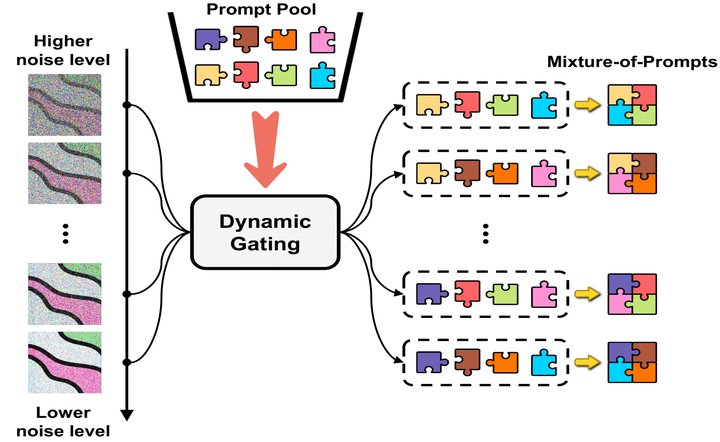
We present Diffusion Model Patching (DMP), a simple method to boost the performance of pre-trained diffusion models that have already reached convergence, with a negligible increase in parameters. DMP inserts a small, learnable set of prompts into the model's input space while keeping the original model frozen. The effectiveness of DMP is not merely due to the addition of parameters but stems from its dynamic gating mechanism, which selects and combines a subset of learnable prompts at every timestep (i.e., reverse denoising steps). This strategy, which we term "mixture-of-prompts", enables the model to draw on the distinct expertise of each prompt, essentially "patching" the model's functionality at every timestep with minimal yet specialized parameters. Uniquely, DMP enhances the model by further training on the original dataset already used for pre-training, even in a scenario where significant improvements are typically not expected due to model convergence. Notably, DMP significantly enhances the FID of converged DiT-L/2 by 10.38% on FFHQ, achieved with only a 1.43% parameter increase and 50K additional training iterations.

Method and Apparatus with Scene Flow Estimation

Youngjun Kwak, Taekyung Kim, Changick Kim, Byeongjun Park, Changbeom Park

US Patent 2025

Method and Apparatus with Scene Flow Estimation

A scene flow estimation method and apparatus are provided. The scene flow estimation method includes receiving a first feature pyramid and a second feature pyramid by encoding a first frame and a second frame of an input image through the same encoder, extracting a depth feature based on the first feature pyramid, extracting a motion feature based on the first feature pyramid and the second feature pyramid, generating an overall feature based on the depth feature and the motion feature, and estimating a scene flow based on the overall feature.

Bridging Implicit and Explicit Geometric Transformation for Single-Image View Synthesis

Byeongjun Park*, Hyojun Go*, Changick Kim

TPAMI 20243D/4D Generation

IF=20.8 (2024)

Bridging Implicit and Explicit Geometric Transformation for Single-Image View Synthesis

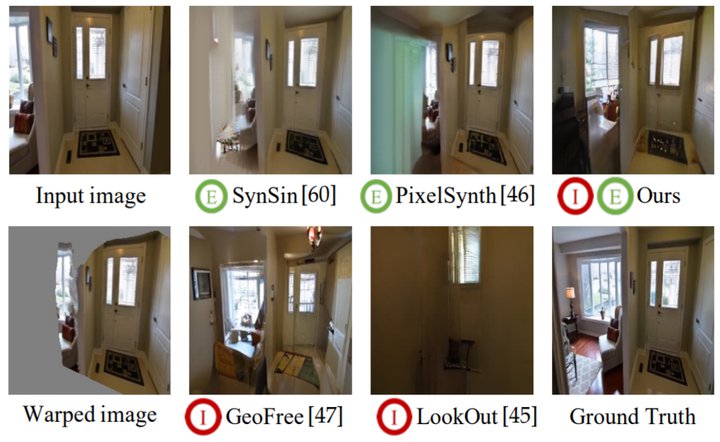
Creating novel views from a single image has achieved tremendous strides with advanced autoregressive models, as unseen regions have to be inferred from the visible scene contents. Although recent methods generate high-quality novel views, synthesizing with only one explicit or implicit 3D geometry has a trade-off between two objectives that we call the "seesaw" problem: 1) preserving reprojected contents and 2) completing realistic out-of-view regions. Also, autoregressive models require a considerable computational cost. In this paper, we propose a single-image view synthesis framework for mitigating the seesaw problem while utilizing an efficient non-autoregressive model. Motivated by the characteristics that explicit methods well preserve reprojected pixels and implicit methods complete realistic out-of-view regions, we introduce a loss function to complement two renderers. Our loss function promotes that explicit features improve the reprojected area of implicit features and implicit features improve the out-of-view area of explicit features. With the proposed architecture and loss function, we can alleviate the seesaw problem, outperforming autoregressive-based state-of-the-art methods and generating an image ≈100 times faster. We validate the efficiency and effectiveness of our method with experiments on RealEstate10K and ACID datasets.

Switch Diffusion Transformer: Synergizing Denoising Tasks with Sparse Mixture-of-Experts

Byeongjun Park, Hyojun Go, Jin-Young Kim, Sangmin Woo, Seokil Ham, Changick Kim

ECCV 2024Diffusion Model Architecture

Switch Diffusion Transformer: Synergizing Denoising Tasks with Sparse Mixture-of-Experts

Diffusion models have achieved remarkable success across a range of generative tasks. Recent efforts to enhance diffusion model architectures have reimagined them as a form of multi-task learning, where each task corresponds to a denoising task at a specific noise level. While these efforts have focused on parameter isolation and task routing, they fall short of capturing detailed inter-task relationships and risk losing semantic information, respectively. In response, we introduce Switch Diffusion Transformer (Switch-DiT), which establishes inter-task relationships between conflicting tasks without compromising semantic information. To achieve this, we employ a sparse mixture-of-experts within each transformer block to utilize semantic information and facilitate handling conflicts in tasks through parameter isolation. Additionally, we propose a diffusion prior loss, encouraging similar tasks to share their denoising paths while isolating conflicting ones. Through these, each transformer block contains a shared expert across all tasks, where the common and task-specific denoising paths enable the diffusion model to construct its beneficial way of synergizing denoising tasks. Extensive experiments validate the effectiveness of our approach in improving both image quality and convergence rate, and further analysis demonstrates that Switch-DiT constructs tailored denoising paths across various generation scenarios.

HarmonyView: Harmonizing Consistency and Diversity in One-Image-to-3D

Sangmin Woo*, Byeongjun Park*, Hyojun Go, Jin-Young Kim, Changick Kim

CVPR 20243D/4D Generation

Finalist, Qualcomm Innovation Fellowship 2024 Korea

Recent progress in single-image 3D generation highlights the importance of multi-view coherency, leveraging 3D priors from large-scale diffusion models pretrained on Internet-scale images. However, the aspect of novel-view diversity remains underexplored within the research landscape due to the ambiguity in converting a 2D image into 3D content, where numerous potential shapes can emerge. Here, we aim to address this research gap by simultaneously addressing both consistency and diversity. Yet, striking a balance between these two aspects poses a considerable challenge due to their inherent trade-offs. This work introduces HarmonyView, a simple yet effective diffusion sampling technique adept at decomposing two intricate aspects in single-image 3D generation: consistency and diversity. This approach paves the way for a more nuanced exploration of the two critical dimensions within the sampling process. Moreover, we propose a new evaluation metric based on CLIP image and text encoders to comprehensively assess the diversity of the generated views, which closely aligns with human evaluators' judgments. In experiments, HarmonyView achieves a harmonious balance, demonstrating a win-win scenario in both consistency and diversity.

Denoising Task Routing for Diffusion Models

Byeongjun Park*, Sangmin Woo*, Hyojun Go*, Jin-Young Kim*, Changick Kim

ICLR 2024Diffusion Model Architecture

Denoising Task Routing for Diffusion Models

Diffusion models generate highly realistic images by learning a multi-step denoising process, naturally embodying the principles of multi-task learning (MTL). Despite the inherent connection between diffusion models and MTL, there remains an unexplored area in designing neural architectures that explicitly incorporate MTL into the framework of diffusion models. In this paper, we present Denoising Task Routing (DTR), a simple add-on strategy for existing diffusion model architectures to establish distinct information pathways for individual tasks within a single architecture by selectively activating subsets of channels in the model. What makes DTR particularly compelling is its seamless integration of prior knowledge of denoising tasks into the framework: (1) Task Affinity: DTR activates similar channels for tasks at adjacent timesteps and shifts activated channels as sliding windows through timesteps, capitalizing on the inherent strong affinity between tasks at adjacent timesteps. (2) Task Weights: During the early stages (higher timesteps) of the denoising process, DTR assigns a greater number of task-specific channels, leveraging the insight that diffusion models prioritize reconstructing global structure and perceptually rich contents in earlier stages, and focus on simple noise removal in later stages. Our experiments reveal that DTR not only consistently boosts diffusion models' performance across different evaluation protocols without adding extra parameters but also accelerates training convergence. Finally, we show the complementarity between our architectural approach and existing MTL optimization techniques, providing a more complete view of MTL in the context of diffusion training. Significantly, by leveraging this complementarity, we attain matched performance of DiT-XL using the smaller DiT-L with a reduction in training iterations from 7M to 2M.

Point-DynRF: Point-based Dynamic Radiance Fields from a Monocular Video

Byeongjun Park, Changick Kim

WACV 2024

Point-DynRF: Point-based Dynamic Radiance Fields from a Monocular Video

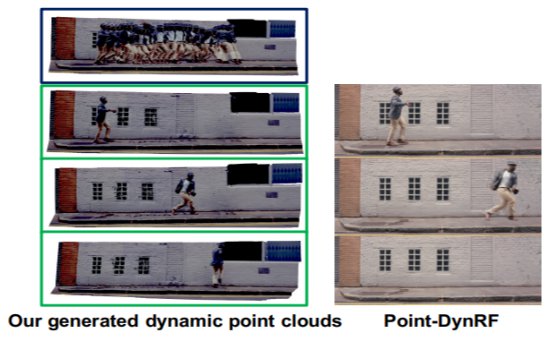
Dynamic radiance fields have emerged as a promising approach for generating novel views from a monocular video. However, previous methods enforce the geometric consistency to dynamic radiance fields only between adjacent input frames, making it difficult to represent the global scene geometry and degenerates at the viewpoint that is spatio-temporally distant from the input camera trajectory. To solve this problem, we introduce point-based dynamic radiance fields (\textbf{Point-DynRF}), a novel framework where the global geometric information and the volume rendering process are trained by neural point clouds and dynamic radiance fields, respectively. Specifically, we reconstruct neural point clouds directly from geometric proxies and optimize both radiance fields and the geometric proxies using our proposed losses, allowing them to complement each other. We validate the effectiveness of our method with experiments on the NVIDIA Dynamic Scenes Dataset and several causally captured monocular video clips.

Temporal Flow Mask Attention for Open-Set Long-Tailed Recognition of Wild Animals in Camera-Trap Images

Jeongsoo Kim, Sangmin Woo, Byeongjun Park, Changick Kim

ICIP 2022

Temporal Flow Mask Attention for Open-Set Long-Tailed Recognition of Wild Animals in Camera-Trap Images

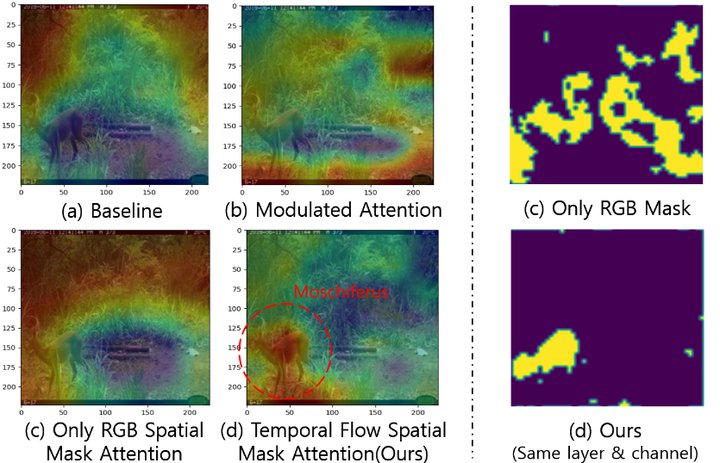
Camera traps, unmanned observation devices, and deep learning-based image recognition systems have greatly reduced human effort in collecting and analyzing wildlife images. However, data collected via above apparatus exhibits 1) long-tailed and 2) open-ended distribution problems. To tackle the open-set long-tailed recognition problem, we propose the Temporal Flow Mask Attention Network that comprises three key building blocks: 1) an optical flow module, 2) an attention residual module, and 3) a meta-embedding classifier. We extract temporal features of sequential frames using the optical flow module and learn informative representation using attention residual blocks. Moreover, we show that applying the meta-embedding technique boosts the performance of the method in open-set long-tailed recognition. We apply this method on a Korean Demilitarized Zone (DMZ) dataset. We conduct extensive experiments, and quantitative and qualitative analyses to prove that our method effectively tackles the open-set long-tailed recognition problem while being robust to unknown classes.

Fine-Grained Multi-Class Object Counting

Hyojun Go, Junyoung Byun, Byeongjun Park, Myung-Ae Choi, Seunghwa Yoo, Changick Kim

ICIP 2021

Fine-Grained Multi-Class Object Counting

Many animal species in the wild are at the risk of extinction. To deal with this situation, ecologists have monitored the population changes of endangered species. However, the current wildlife monitoring method is extremely laborious as the animals are counted manually. Automated counting of animals by species can facilitate this work and further renew the ways for ecological studies. However, to the best of our knowledge, few works and publicly available datasets have been proposed on multi-class object counting which is applicable to counting several animal species. In this paper, we propose a fine-grained multi-class object counting dataset, named KR-GRUIDAE, which contains endangered red-crowned crane and white-naped crane in the family Gruidae. We also propose a specialized network for multi-class object counting and line segment density maps, and show their effectiveness by comparing results of existing crowd counting methods on the KR-GRUIDAE dataset.

Experience & Education

Experience

  1. Aug. 2025 – Present AI Research Scientist @ EverEx Mandatory Military Service
  2. Mar. 2018 – Aug. 2018 AI Research Intern @ Koh Young Technology

Education

  1. Mar. 2020 – Aug. 2025 Ph.D. in Electrical Engineering @ KAIST
  2. Mar. 2015 – Feb. 2020 B.S. in Electrical Engineering @ KAIST Graduated Cum Laude
  3. Mar. 2013 – Feb. 2015 Gyeongnam Science High School

Honors & Services

Awards

  • Finalist, Qualcomm Innovation Fellowship 2024 KoreaDec. 2024
  • Samsung Best Paper Award, IEIE Autumn Annual ConferenceNov. 2021
  • National Academic Excellence Scholarship (Science and Engineering, Korea)2016, 2017, 2018

Invited Talks

  • ETRI — Recent Trends in 3D Content CreationAug. 2024

Conference Reviewer

SIGGRAPH 2026 CVPR 2026 ICCV 2025 ECCV 2024, 2026 ICML 2025 ICLR 2025, 2027 NeurIPS 2024, 2025

Journal Reviewer

  • IEEE Transactions on Visualization and Computer Graphics2025
  • IEEE Transactions on Image Processing2025